
Baseball Glove Anatomy 101
Whether you're about to relace your glove for the first time or you've been playing for years, understanding the anatomy of your baseball glove helps you take better care of it, communicate about repairs, and appreciate the craftsmanship that goes into every mitt.
Let's break down each part of your glove - what it's called, what it does, and some interesting history behind the design.

The Web
What it is: The leather section between your thumb and index finger that creates a pocket for catching the ball.
What it does: The web is your glove's most visible feature and varies dramatically by position. It helps trap the ball, provides structure to the pocket, and in some cases (like for pitchers) helps conceal your grip on the ball.
History note: Early gloves had no web at all - just padding between the fingers. The web was introduced at the turn of the 20th century and was initially solidly sewn in with no adjustment possible. When manufacturers first added tiny buckles to make webs adjustable, it revolutionized glove customization. Today's laced webs can be adjusted, tightened, and completely customized to a player's preference.
Common web styles: I-web, H-web, trapeze, modified trapeze, basket web, single post, dual post. Each serves different positions and playing styles.

The Pocket
What it is: The cupped area in the palm of your glove where the ball naturally settles when you make a catch.
What it does: A well-formed pocket is essential for securing the ball. The depth and shape of your pocket depends on your position - infielders typically want a shallow pocket for quick transfers, while outfielders prefer a deeper pocket for securing fly balls.
Design evolution: Until the 1950s, gloves were designed for catching the ball in your palm with two hands. The Rawlings "Bill Doak" model introduced the deep pocket design that allowed for one-handed catches - a game-changer that's now standard on every modern glove. Hank Greenberg's work on the "Trapper" first baseman's mitt took this even further, creating a pocket deep enough to snare throws one-handed and dramatically reduce errors.

The Heel
What it is: The bottom section of your glove, near your wrist, where the leather can be opened and closed.
What it does: The heel lacing allows you to open the glove to access the interior for cleaning and conditioning, or to adjust internal padding. It's also where you grip the glove to close it around the ball.
Historical significance: The heel lace was one of the first laces added to baseball gloves. Before this innovation, players who wanted to adjust padding had to cut open their gloves and sew them back up, often damaging the integrity of the leather. The heel lace solved this problem and remains a standard feature on every glove today.

Fingers (Index, Middle, Ring, Pinky)
What they are: The four individual finger sections that give the glove its shape and flexibility.
What they do: The fingers provide structure, help close the glove around the ball, and allow for the glove to move naturally with your hand. Lacing runs through the tips of the fingers on modern gloves to keep the ball from pushing through and to maintain the glove's shape.
Fun fact: Hall of Famer Honus Wagner didn't like having any leather between his palm, claiming it interfered with his fielding. So he simply cut a hole in the palm of his glove - a radical modification that would be unthinkable with today's designs. His approach shows how players have always sought to customize their equipment, even when it meant taking drastic measures.
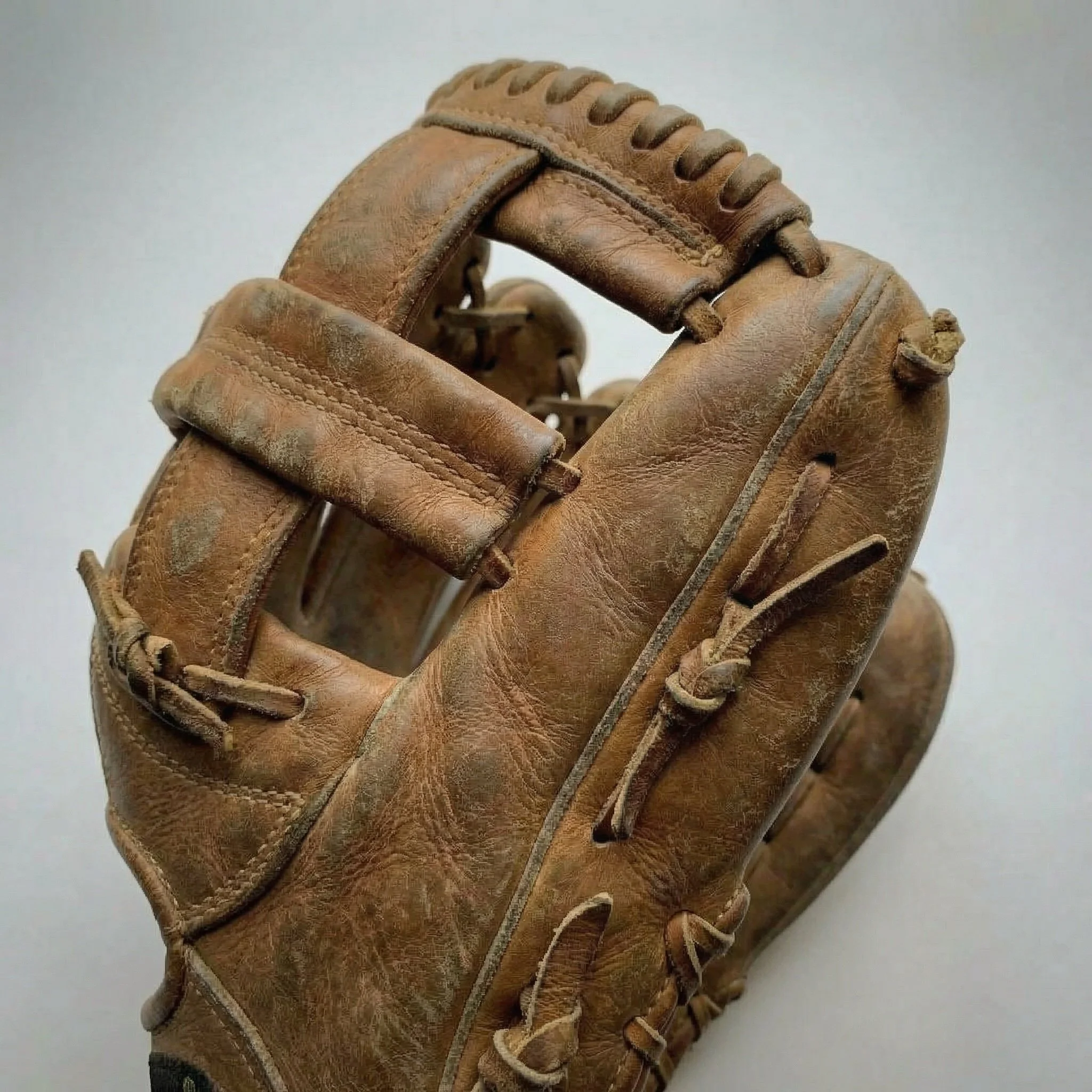
The Thumb
What it is: The separate section opposite your fingers that creates the catching area.
What it does: The thumb provides the opposing structure that allows the glove to open and close. The space between the thumb and index finger (bridged by the web) is critical to your glove's pocket depth and catching ability.
Design note: Early gloves had very short thumbs. The Rawlings Bill Doak model extended the thumb length, which allowed for more space between the index finger and thumb - creating room for that revolutionary deeper pocket and larger web.
The Palm
What it is: The interior section of the glove that sits against your palm.
What it does: The palm area often has additional padding sewn in for comfort and impact protection. The palm lacing typically runs horizontally across this section.
Why it matters for relacing: The palm lace sees constant contact with your hand, which is why it's typically done with thinner (3/16" skived) lace. This creates better comfort and a more natural feel. If you've ever had a glove that felt bulky or uncomfortable in your palm, chances are the lace wasn't skived properly.

The Wrist Opening (Hand Opening)
What it is: The opening at the bottom of the glove where your hand enters.
What it does: This area is laced to provide structure and ensure the glove fits snugly on your hand. The tightness here affects how the glove feels and moves with your hand.
Adjustment options: Some gloves have adjustable wrist straps that allow you to tighten or loosen the fit without relacing. The wrist strap lacing is one of the most commonly adjusted areas - players often customize this for comfort and security.

Pinky and Thumb Loops
What they are: The short laces at the tips of your pinky and thumb, often with decorative knots at the ends.
What they do: Beyond adding a finished look to the glove, these provide a small amount of structure at the finger tips. Some youth players use these loops to help close their gloves when learning to catch.
Style note: These knots are where you can see a relacing craftsman's attention to detail. A properly tied baseball glove knot (square knot) lies flat and secure. Poorly tied knots look messy and can come undone during play.

The Web Spiral (or Finger Lacing)
What it is: The continuous lacing that runs along the outer edge of your fingers and connects to the web.
What it does: This lacing holds the overall structure of the glove together and connects the fingers to the web. It's typically one long continuous piece of lace.

Binding
What it is: The leather strips that run along the outer edges of the glove's fingers and thumb, sometimes with decorative stitching.
What it does: Binding reinforces the edges of the glove and provides durability at high-stress points. It also gives the glove a finished, professional appearance.
Quality indicator: The quality of binding is one way to distinguish between budget gloves and professional models. Higher-end gloves have durable leather binding that holds up to years of play compared to vinyl binding that tends to dry out, and wear and tear more easily.
The Back (Open Back vs. Closed Back)
What it is: The back side of the glove - the part you see when the glove is closed.
What it does: This area can be "open back" (with a large opening) or "closed back" (mostly covered with leather). Open backs provide more flexibility and are popular with infielders. Closed backs provide more structure and support.
Modern trend: The Wilson A2000, designed in the mid-1950s, popularized many features still used today, including specific back designs for different positions. This attention to position-specific design changed how gloves were manufactured.
Putting It All Together
Understanding these parts helps you in several practical ways:
When shopping: You can ask specific questions about web style, pocket depth, and back design.
When relacing: You'll know the proper names for each section and can follow instructions more easily.
When communicating with repair professionals: You can describe exactly what's broken or what you want customized.
When maintaining your glove: You'll know which areas need extra attention during cleaning and conditioning.
A Note on Materials
Generally, your glove or mitt - whether it's a fielder's glove, first baseman's mitt, or catcher's mitt - is based on original designs that were devised more than 150 years ago. But the materials have evolved significantly.
Until the end of the dead ball era, fielders' gloves were made with lightweight, soft kid skins and horse hides. By the time Babe Ruth came along, gloves were beginning to be made from cowhide. Although stiff at first, when the leather softened during break-in, it made gloves more durable and desirable.
Today's premium gloves use specially tanned steerhide or kip leather, chosen for durability, break-in characteristics, and feel. And those laces holding everything together? They're specially tanned leather - chosen for flexibility and strength - from manufacturers like Golomb USA who've been perfecting the craft since 1910.
Ready to Learn More?
Now that you understand your glove's anatomy, you're ready to tackle relacing, repairs, or just better maintenance. Check out our other guides on:
Essential Tips for Relacing Your Baseball Glove
Essential Tools for Relacing Your Baseball Glove
How to Clean and Condition Your Baseball Glove
Need quality laces or restoration services? Visit glovedoctor.com for professional-grade Golomb USA laces and expert restoration services.
