
The Last American Glove Maker
One of the things we believe at GOLOMB — five generations into this business — is that the equipment has a story worth knowing. Not just who made it or when, but what it cost to make it that way, what decisions went into it, what it says about the people and the era that produced it. A glove isn't just leather and lace. It's the end result of a hundred choices made by people who cared about the game.
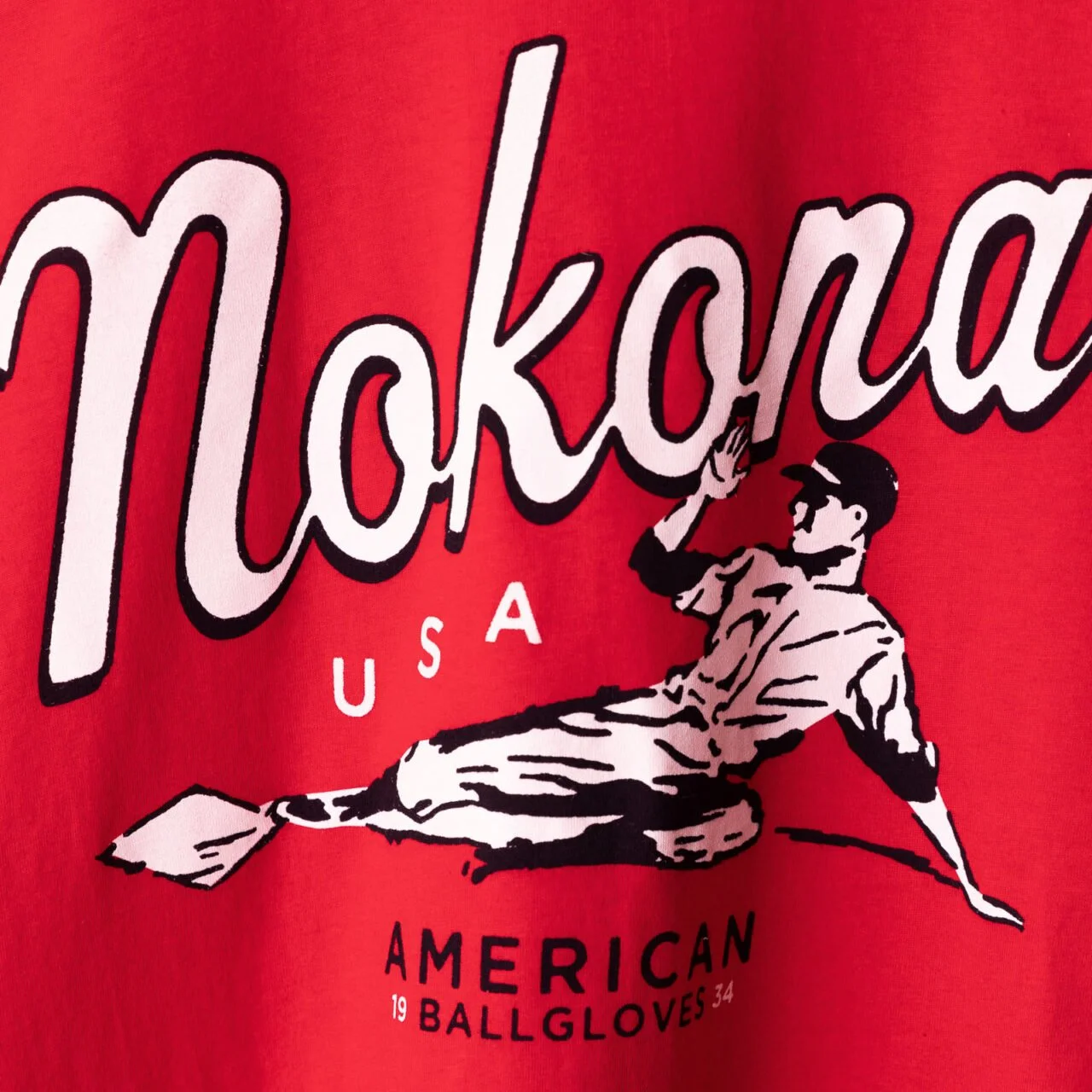
Nokona is one of those stories worth knowing.
Founded in 1926 in Nocona, Texas, Nokona has been making baseball gloves by hand from top-grain steerhide since 1934. During World War II they produced close to a million gloves for American servicemen overseas. When the offshoring wave hit in the 1960s and every other major American glove maker — Wilson, Rawlings, Spalding — moved manufacturing overseas, Nokona's president said he'd rather take a bucket of worms and go fishing than import Nokona gloves. They stayed in Nocona, Texas. By 1980 they put American Made Glove right in the model name — stamped into the leather itself. AMG. Not a marketing line. A statement of fact.
They are the last major baseball glove manufacturer still producing on American soil. You can read their full history on their website here: https://nokona.com/our-story/
What we'd add — from nearly 40 years of handling gloves — is that those manufacturing decisions show up in the object. At some point in the 1980s, Nokona shifted to what they call a buffalo hide — softer than the typical steerhide used across most ball gloves, with different durability characteristics. Glove leather is only as consistent as whoever's supplying it, and whatever changed in their sourcing around that era, you can feel it in how the material performs. When John — The Original Glove Doctor — picks up a Nokona, he can tell immediately that it's not the same leather as a Rawlings or a Wilson.
He also notices something in the construction most people wouldn't catch: the pocket on Nokona gloves sits higher than usual. Where most gloves let the crotch between the fingers come down lower, Nokona keeps more leather up in that zone. The base of the web — between the first and second finger — is one of the most common failure points in a baseball glove. It's where Wilsons tend to go first; it shows up in Rawlings too. That extra leather is a structural choice. Whether a player prefers that or not comes down to the individual, but it's a decision that's been built into the design for a reason.
Nokona has its fans — players who find what works for them and come back to it. That loyalty is well-documented. They've also had real setbacks — in 2006 their factory burned to the ground. They were back in production ten days later, not one employee lost a paycheck. Rising from the ashes is a cliché until it's literally what happened.
This is the kind of history that shows up in the work. You can feel it in the leather, see it in the construction, read it in the stamp on the thumb. That's what makes restoration worth doing right.
This Field Note is part of Glove File No. 001 — Old Faithful, a Nokona AMG 400 restored by John Golomb, The Glove Doctor.
