
The Standard Bearer: Cooper Canada and the Golden Age of Hockey Equipment
One of the things you learn five generations into a sporting goods family is that the equipment has a story worth knowing. Not just who made it or when, but what it cost to make it that way, what decisions went into it, what it says about the people and the era that produced it. A piece of equipment is the end result of a hundred choices made by people who understood the sport, understood the materials, and cared enough to get both right.
Jack and Morris Golomb — the grandfather and great-uncle of John Golomb, the Glove Doctor — began making boxing equipment on the Lower East Side in 1910, in what would become Everlast. Three generations of our family built and refined professional boxing equipment for the better part of a century, and that accumulated knowledge informs everything we do in the shop today. Cooper Canada is a company that earned the same kind of respect in hockey that Everlast earned in boxing, and their story is worth knowing. Here is what we learned about them.
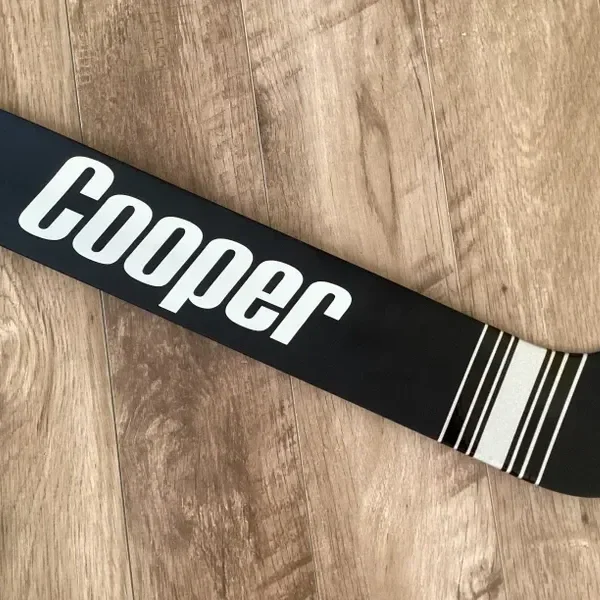
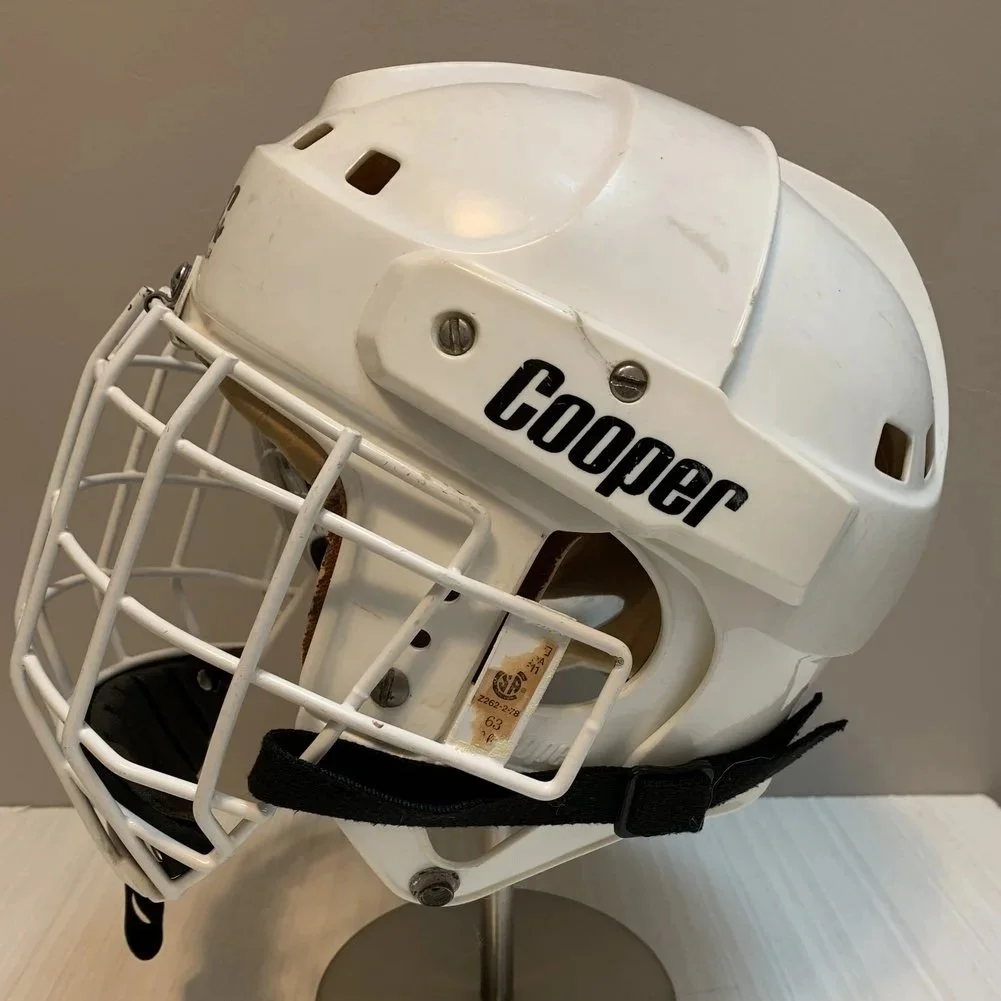
Cooper Canada started in 1949 when Jack Cooper and Cecil Weeks acquired a Toronto company called General Leather Goods, which had spent the Depression-era years making ski and snowshoe harnesses before pivoting into hockey shin guards and gloves. It was a modest beginning for what would become, over the next four decades, the defining name in professional hockey equipment.
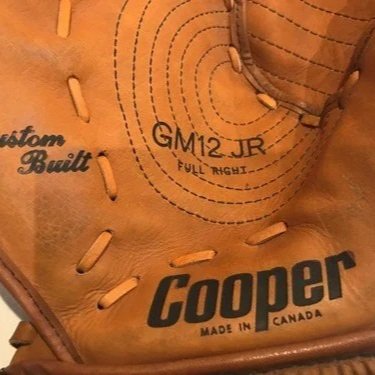
By the time the company renamed itself Cooper Canada in 1971 and went public on the Toronto Stock Exchange, it was already the standard for professional goaltenders. The GM12 blocker and catching glove were what you found on NHL goaltenders through the 1970s and 1980s. Ron Hextall wore Cooper. Ed Belfour wore Cooper. Tom Barrasso wore Cooper. That dominance was a product of the equipment genuinely being better than the alternatives, built from full leather with the expectation that it would hold up under professional use over years.
What distinguished Cooper during its peak years was a willingness to work directly with players to develop and refine the equipment. In the 1970s, when professional athlete endorsement deals were still relatively rare, Dave Dryden, a goalie in the NHL for more than a decade and the brother of Ken Dryden, essentially became an informal collaborator with Cooper’s design team. He would show up at the factory and push the engineers to question their assumptions. Why does so much of the glove need to be leather? Could nylon carry the load in areas that don’t take direct puck contact? It was trial and error, working through the materials by hand until the right combination of weight and durability emerged. Many of the innovations Dryden developed with Cooper’s designers ended up in the product line the following year, though he received no credit for it and apparently wanted none.
That kind of player-manufacturer relationship — direct, iterative, material-specific — was common among serious sporting goods makers of that era. Jack Golomb built the same kind of relationships with fighters from the beginning. Jack Dempsey was an early collaborator. The equipment that came out of those conversations — headgear built to withstand fifteen rounds of serious training, gloves cut and stitched for professional use — reflected real knowledge about what the sport demanded and what the materials could bear. Cooper and Everlast were operating in different sports and different countries, but the underlying method was the same: put the equipment in the hands of the people who needed it to work, watch what happened, and build what you learned back into the next version.
Cooper’s transition away from full leather construction through the 1970s and 1980s was partly a response to that same player feedback. Dave Dryden’s question — why does this need to be leather? — was the right question at the right moment. Nylon and high-density foam were lighter, and in the areas of equipment that didn’t take direct impact, they performed comparably. Cooper pioneered the use of those synthetic materials in hockey equipment, which was genuinely innovative at the time and influenced how the entire industry built gear going forward. But the transition also changed what the equipment was. The GM12 from the late 1970s, with its full leather construction and the cowhide that Cooper sourced for durability, is a materially different object from the synthetic equipment that followed it. It is heavier and it requires more maintenance, but the leather behaves differently under stress and it ages differently — it breaks in rather than breaking down.
Canstar Sports, the parent company of Bauer Hockey, acquired Cooper’s hockey division in 1990. Nike acquired Canstar five years later. The Cooper name was retired, and with it the manufacturing approach that had defined the company. Jack Cooper himself had been elected to the U.S. National Sporting Goods Association’s Sporting Goods Industry Hall of Fame in 1979, and to the Canadian Business Hall of Fame in 1989. Former employees remember him for something else: he told his production managers that the people on the factory floor needed to go home every night feeling good about where they worked, and that they needed to be respected.
The equipment those people made is still out there, still performing the way it was designed to perform, because it was designed to last. That is what serious sporting goods manufacturing looked like in that era, and it is a standard worth knowing about.
