
Three Dollars at Pearl Harbor
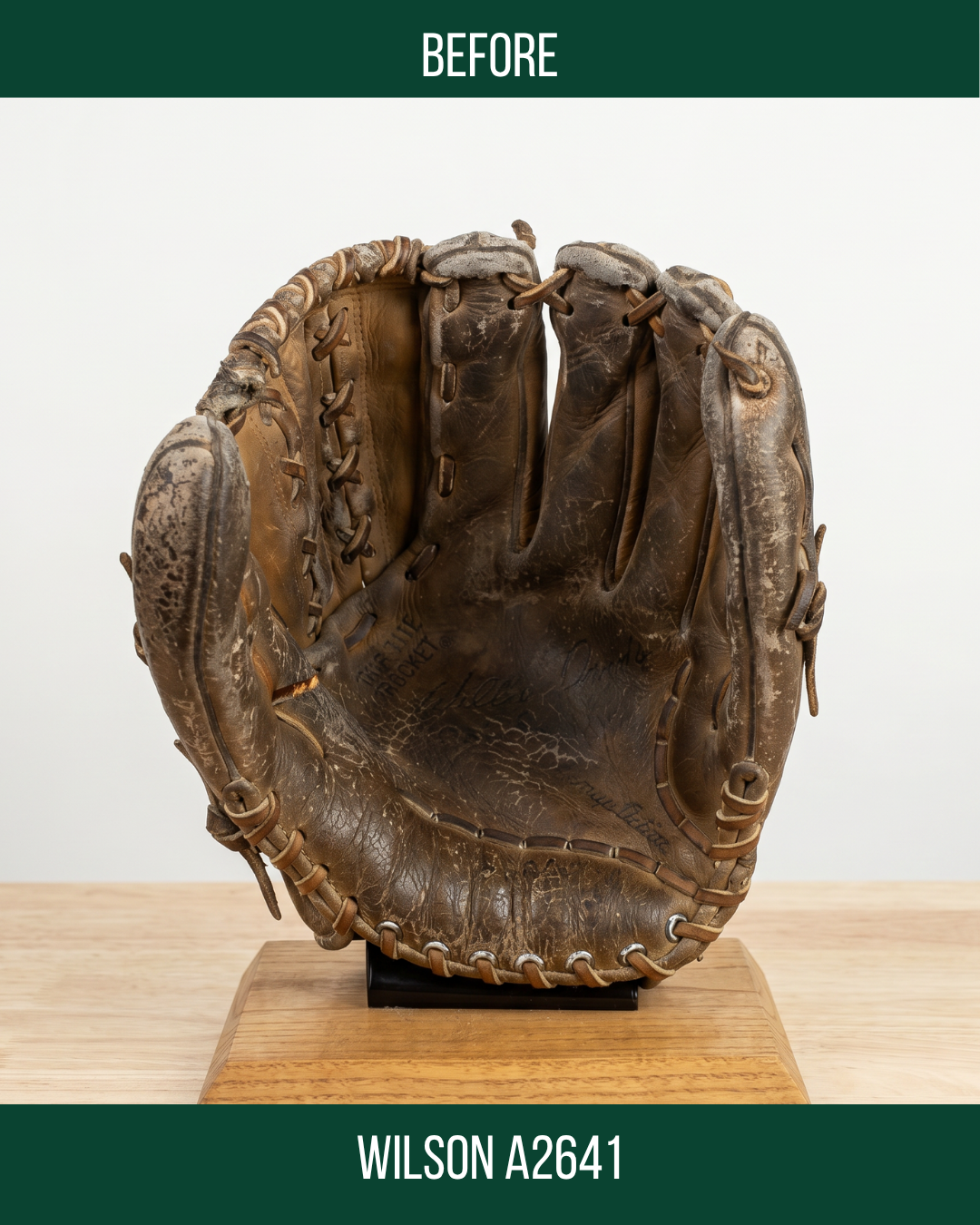
Before
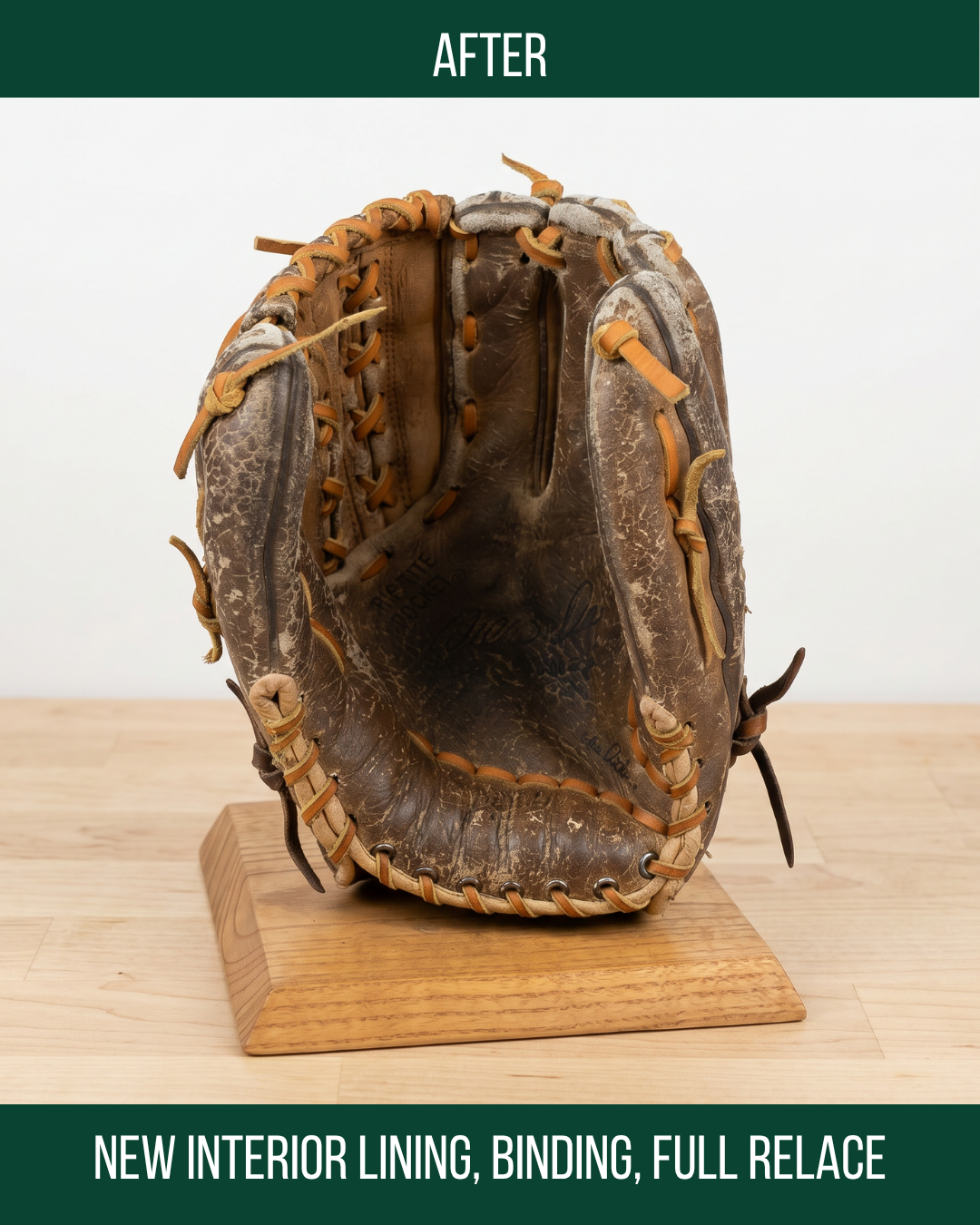
After
A Wilson Willie Davis signature model arrived from California in January. Chad bought it at the Pearl Harbor Navy Exchange in 1969 for three dollars, while his ship was docked for repairs. He has had it for fifty-six years.
"I was stationed aboard the aircraft carrier USS Enterprise CVAN-65 in January 1969 when several bombs cooked off, causing severe damage. During the two months of repair, I purchased the glove from the Pearl Harbor Navy Exchange for $3.00 so I could participate in local baseball and softball games."
— Chad, CaliforniaOn the morning of January 14, 1969, the USS Enterprise was conducting air operations approximately 70 miles southwest of Pearl Harbor when a Zuni rocket mounted to a parked F-4 Phantom cooked off after being overheated by the exhaust of a nearby aircraft starter unit. The explosion ignited fires and additional detonations across the flight deck. Twenty-seven sailors were killed and 314 were injured. Fifteen aircraft were destroyed. The flight deck's armored plating buckled badly enough that no landings were possible. The Enterprise was escorted to Pearl Harbor Naval Shipyard the following day and spent the next 51 days in repairs before resuming her scheduled deployment to Vietnam and the Tonkin Gulf.
Chad was aboard for all of it.
Baseball had traveled with American servicemen overseas since the Civil War. By the mid-twentieth century it was deeply embedded in military culture — teams formed on bases, leagues organized across installations, and the Navy in particular maintained baseball programs around the world. The game served a practical function: something men already knew how to play, requiring minimal equipment, organizable quickly wherever there was open ground and enough people to field two sides. A Navy Exchange at Pearl Harbor in 1969 stocking baseball gloves was not unusual. It was part of a supply culture that had understood ballplaying as a routine part of military life for decades.
By the Vietnam era, the formal military baseball infrastructure that had peaked during World War II had largely wound down. The informal tradition persisted. For the crew of the Enterprise, docked at Pearl Harbor through February while the ship was repaired around them, a five-dollar glove from the Navy Exchange and a game of softball with the locals was as ordinary a way to pass the time as any other.
The glove Chad bought was a Willie Davis signature model. Davis was the center fielder for the Los Angeles Dodgers — a three-time Gold Glove winner, one of the fastest players in the National League, and in January 1969, in the middle of what would become his best professional season. He hit .311 that year and put together a 31-game hitting streak that remains the longest in Dodgers franchise history. His name on a glove at a Navy Exchange in Pearl Harbor in early 1969 was not unusual. Wilson produced signature models for active players throughout that era as standard retail practice.
The exterior leather was in good condition. The interior lining had given out — the original material had broken down over decades of use and storage. The Glove Doctor removed the old lining, replicated the interior in new leather matched to the original construction, and relaced the glove. That was the scope of the work. The glove did not need more than that.
Chad bought this glove at Pearl Harbor in 1969 for three dollars. It goes back to California in better shape than it arrived.
When production moves overseas, the construction changes. What that shift looked like in American sporting goods manufacturing and what it means for the equipment that came before it.
Read →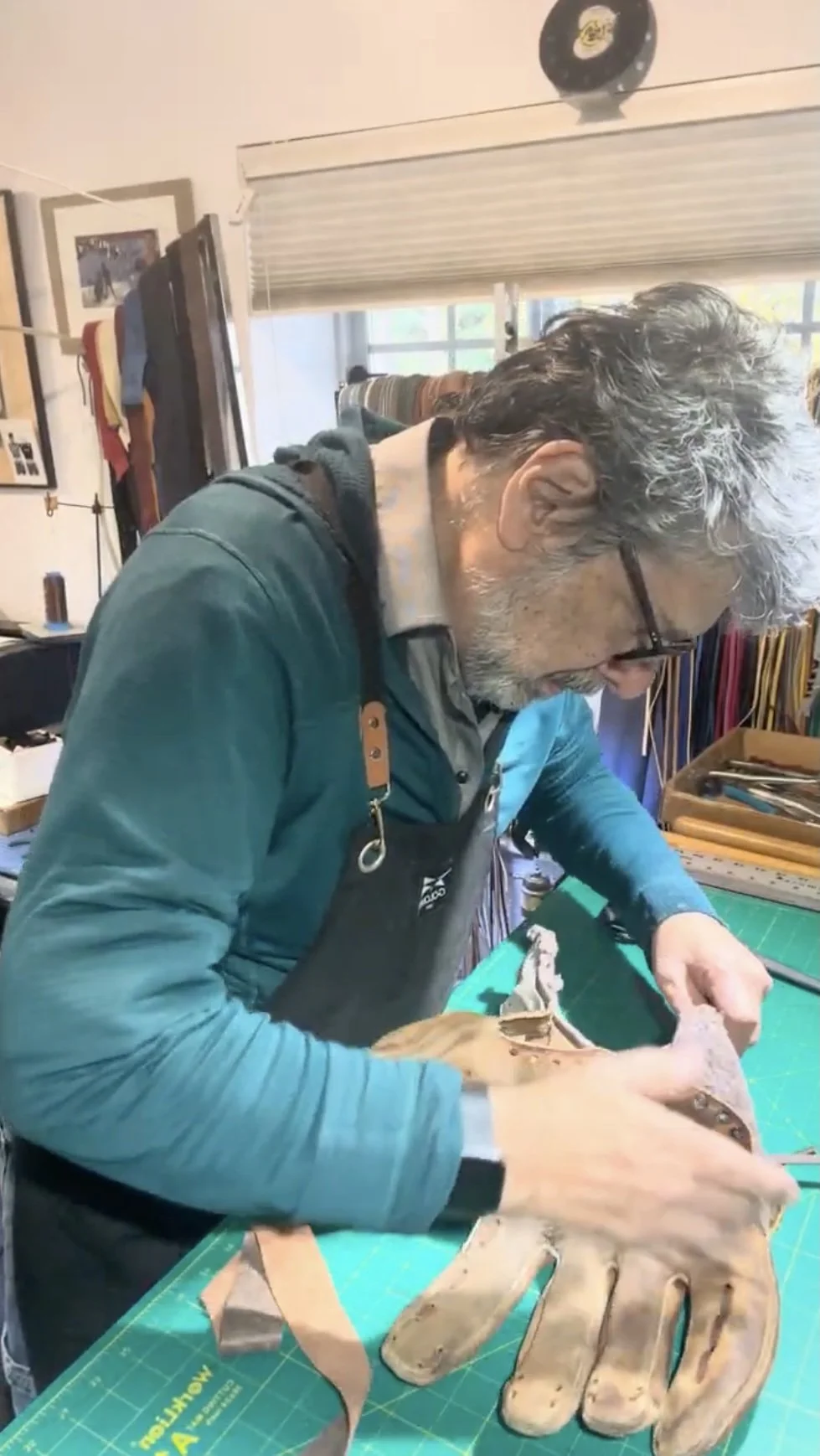
A MacGregor G119 came in with a note. The customer wanted to restore it, not replace it. Some equipment carries more than leather and lace.
Read →
The same principles apply across every glove that comes through the shop — assess what holds, replace what doesn't, send it back in better shape than it arrived.
Read →